

A big carpet for living room spaces can make a seating area feel more connected, give furniture a clear arrangement and add comfort to hard flooring. The right size depends on your sofa, the distance between your furniture and the amount of floor you want the rug to cover.
For most living rooms, an 8x10 ft or 9x12 ft rug is a useful starting point. A smaller seating area may need less coverage, while a spacious room with a sectional sofa can benefit from a larger rug. Before choosing a design, measure the furniture arrangement and decide how much of it should sit on the carpet.
From neutral wool rugs to textured shaggy carpets and patterned designer styles, the best choice is one that suits your room's proportions, everyday use and interior style.
What size big carpet for living room spaces should you choose?
The right carpet size depends on the seating layout, sofa dimensions and available floor space. A large rug should connect the main furniture pieces without blocking doorways or making the room difficult to move through.

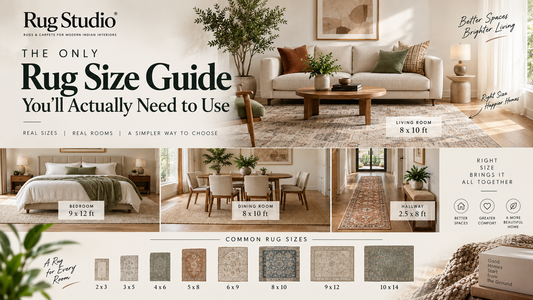
Here is a practical starting guide for common living room rug sizes.
| Rug size | Best suited for | Placement suggestion |
|---|---|---|
| 5x8 ft | Compact living rooms and smaller seating arrangements | Place beneath the coffee table, ideally extending towards the sofa and chairs |
| 6x9 ft | Small to medium living rooms | Position the front legs of the main seating pieces on the rug |
| 8x10 ft | Medium living rooms with a sofa and accent chairs | Fit the front legs of the seating furniture on the rug |
| 9x12 ft | Larger living rooms and sectional sofas | Aim to place most or all seating furniture on the rug |
| 10x14 ft or larger | Spacious rooms and open-plan interiors | Use the rug to define the complete seating zone |
These are general guidelines, not fixed rules. Measure your furniture and available floor area before ordering, and check the actual dimensions of the rug you choose.
For more examples, read Rug Studio's guide to common rug sizes.
Should a large carpet go under the sofa?
Yes. In most living rooms, placing the front legs of the sofa on the rug creates a stronger visual connection between the sofa, coffee table and accent chairs.
If your room is large enough, you can place all the main seating furniture on the carpet. Leave enough space around the arrangement for comfortable movement.
A rug that sits only beneath the coffee table can look disconnected from the sofa, especially in a spacious room.
How much bigger should a rug be than a coffee table?
The rug should extend beyond the coffee table far enough to relate visually to the sofa and other seating. There is no single measurement that works for every layout.
For example, a 4 ft coffee table placed in the centre of an 8x10 ft rug can leave room for the surrounding seating arrangement. Measure the sofa and chair positions first, then check whether the rug creates a connected area.
6 living room carpet ideas for larger spaces
The best living room carpet ideas start with the room you already have. Look at your flooring, wall colour, sofa fabric and furniture layout before deciding whether the carpet should provide a quiet background or become a focal point.
1. Neutral carpets for a balanced living room
Beige, ivory, taupe and warm grey carpets work well with wooden furniture, cream upholstery and earthy interiors.

A large neutral rug can connect different furniture finishes without competing with artwork or decorative cushions. Choose a textured surface if you want the carpet to have more visual depth.
2. Abstract carpet designs for modern interiors
Abstract rugs work well when your furniture has clean lines and the room needs a more distinctive pattern.

Try a design with a limited colour palette that repeats shades already present in your sofa, curtains or cushions. This keeps the room connected even when the carpet has a strong pattern.
Browse abstract carpets for design inspiration.
3. Shaggy carpets for a softer seating area
A shaggy carpet has a deeper pile that feels soft underfoot and suits relaxed living rooms.

It can be a good fit for a family movie area or a space where you spend time sitting on the floor. Longer pile usually needs more attention during cleaning, so consider how much foot traffic the room receives.
Explore shaggy carpets if you prefer a fuller texture.
4. Hand-tufted rugs with textured patterns
Hand-tufted rugs can feature detailed designs, varied pile heights and carved sections that add depth to a large carpet.
A high-low pattern can look different as daylight moves across the room because the raised areas cast changing shadows. This is particularly noticeable on rugs with sculpted details.
See hand-tufted carpets for more styles.
5. Jute carpets for natural interiors
Jute rugs bring a visible woven texture and earthy colour to living rooms with wood, linen and neutral fabrics.
They suit casual, rustic and natural interiors. Their relatively firm surface may feel different from a plush wool or shaggy carpet, and moisture needs careful handling.
Explore jute carpets for natural-looking designs.
6. Persian and traditional carpet designs
Persian-inspired motifs and traditional patterns can bring character to rooms with wooden furniture, classic seating and warm colour palettes.
For a balanced look, repeat one or two colours from the rug in your cushions or accessories. If the carpet has a detailed pattern, simpler upholstery can help the room feel less crowded.
Browse Persian carpets for traditional design inspiration.
How to choose the right carpet design for your living room
A large carpet covers a significant part of the floor, so its colour and pattern can affect the entire room. Start with the furniture and flooring, then choose a design that suits the visual weight of the space.
Choose colours that work with your sofa and flooring
-
Beige and ivory: Suit light walls, warm wood and neutral furniture.
-
Grey and charcoal: Can work with contemporary furniture, cooler flooring and darker accents.
-
Brown and earthy tones: Complement timber, leather and natural materials.
-
Blue or green: Can add colour to a room with neutral upholstery.
-
Multicolour patterns: Work well when you want the carpet to connect several colours already used in the room.
A useful design tip: place a sample or photograph of the carpet beside your sofa and flooring before making a decision. Colours can look different in daylight, warm artificial lighting and shaded corners.
Match the pattern to the size of the room
Large geometric patterns and bold motifs can work well in spacious rooms, particularly when the furniture has simple shapes.
Smaller, detailed patterns can also work on a large carpet, but consider how they look from the entrance to the room. A pattern that looks attractive in a close-up product photograph may feel much busier when spread across a wide floor area.
Consider the furniture layout before the carpet style
A rectangular rug is usually an easy fit for a conventional sofa arrangement. A round carpet can work beneath a circular coffee table or in a seating corner with curved furniture.
For a large sectional sofa, check the rug's width and length against the full seating area, including the chaise. A carpet that is wide enough but too short can leave part of the arrangement visually disconnected.
Which material is suitable for a big living room carpet?
The right material depends on foot traffic, comfort, maintenance and the finish you prefer.

| Material | What it feels or looks like | Practical considerations |
|---|---|---|
| Wool | Soft, warm and naturally textured | Can work well in frequently used rooms; some shedding may occur |
| Jute | Firm, earthy and visibly woven | Suits natural interiors; avoid exposing it to excessive moisture |
| Cotton | Often lightweight with a softer, casual feel | Check the construction and washing instructions |
| Silk or silk-blend | Fine detailing and a noticeable sheen | Requires careful handling and appropriate cleaning |
| Polyester or other synthetic fibres | Available in a wide range of colours and textures | Performance depends on the fibre, pile, backing and construction |
The fibre alone does not determine how well a carpet performs. Pile height, density, construction, finishing and maintenance all affect its suitability.
Is a low-pile or high-pile carpet better for a large living room?
A low-pile carpet is generally easier to vacuum and can work well around furniture that moves frequently. A high-pile or shaggy carpet feels fuller underfoot, but debris can be harder to remove from its deeper fibres.
If your living room receives heavy daily traffic, consider a dense, relatively low-pile design. If comfort and a softer appearance matter more in a relaxed seating area, a deeper pile may suit your needs.
Should you choose a hand-tufted or hand-knotted rug?
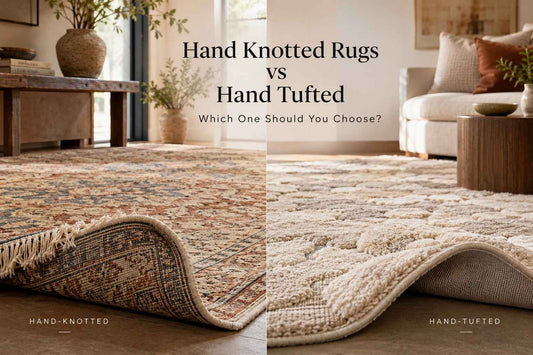
Both constructions can work in a large living room. Hand-tufted rugs allow a wide range of patterns and surface textures, while hand-knotted rugs are made by tying individual knots around the foundation yarns.
The better choice depends on your budget, design preference, intended use and maintenance expectations. Compare the actual materials and construction of individual rugs before deciding.
How to arrange a large carpet in different living room layouts

For a compact living room
Start with a 5x8 ft or 6x9 ft rug, depending on your furniture dimensions. Position it to connect the sofa and coffee table, and keep the main walking paths clear.
For a medium-sized living room
An 8x10 ft carpet can work well with a three-seater sofa and two accent chairs. Aim to place the front legs of the seating furniture on the rug.
For a spacious living room
A 9x12 ft rug or a larger option can help define the seating zone. In an open-plan space, it can visually separate the living area from a dining or work area without adding a partition.
Can you use more than one rug in a large living room?
Yes. In an open-plan home, separate rugs can define the main seating area and a reading nook, provided the colours and textures work together.
Keep a clear visual relationship between the rugs. For example, a neutral rug beneath the sofa can pair with a smaller textured rug near an armchair. Make sure the rugs have suitable backing or rug pads to reduce slipping and bunching.
Common mistakes to avoid when buying a big carpet for living room spaces
-
Choosing the rug before measuring the furniture: The dimensions may fit the floor but fail to connect the seating area.
-
Buying a rug that is too small: A small rug can make a large sofa arrangement feel disconnected.
-
Ignoring pile height: Deep pile may require more maintenance and can be less convenient under furniture that moves often.
-
Choosing colour from a screen alone: Lighting, display settings and surrounding materials can change how a colour appears.
-
Forgetting the backing and rug pad: A rug that shifts or curls can create a tripping hazard.
-
Ignoring cleaning requirements: Choose a material and construction that fit your daily routine.
-
Using the same size in every room: Furniture proportions and walking space vary, even between rooms with similar floor areas.
Before ordering, mark the proposed rug dimensions on the floor using painter's tape. Place the tape around the sofa and coffee table area, then walk around it as you normally would. This simple check can reveal sizing problems before the carpet arrives.
How do you maintain a large living room carpet?
A larger rug may cover more floor, but its care requirements depend on the material and construction.
-
Vacuum regularly using a setting suitable for the rug's pile and fibre.
-
Blot spills promptly with a clean cloth. Avoid rubbing a spill deeper into the pile.
-
Rotate the rug when practical to distribute wear and sunlight exposure more evenly.
-
Follow the manufacturer's cleaning instructions, particularly for wool, silk, viscose and natural fibres.
-
Use an appropriate rug pad to improve grip and reduce movement.
-
Arrange professional cleaning when the rug's material and condition call for it.
Read Rug Studio's rug care guide for more information on looking after your carpet.
Can you get a large carpet in a custom size?
Custom sizing can help when a standard rug leaves too much exposed floor, overlaps a doorway or fails to fit an unusually shaped seating arrangement.

Measure the usable floor area, the complete sofa dimensions and the intended furniture placement before requesting a custom design. You can also discuss the colour palette, pattern, material and construction so the rug suits the room.
Rug Studio provides custom size and design options. Visit the customisation page to enquire about a more personalised fit.
Frequently asked questions about big carpets for living rooms
What is the best size for a big carpet for living room spaces?
An 8x10 ft or 9x12 ft rug is a useful starting point for many medium and large living rooms. Choose the final size according to the sofa dimensions, seating layout, floor area and walking space.
Which carpet design is best for a living room?
The best design depends on the furniture, flooring and interior style. Neutral textured rugs suit understated rooms, abstract designs work with contemporary furniture, and Persian or traditional patterns can complement classic interiors.
Is a large rug better than a small rug in a living room?
A large rug can connect the main seating pieces and define the living area more effectively. A smaller rug can still work in a compact room or a separate seating corner when its dimensions suit the furniture.
Should the sofa legs be on the living room carpet?
Ideally, at least the front legs of the sofa and other main seating pieces should sit on the rug. If the room allows, placing all the seating furniture on the carpet can create a more unified arrangement.
Which material is best for a frequently used living room?
Wool and suitable synthetic fibres can work well in frequently used rooms, depending on their construction, pile and maintenance needs. Choose a material that suits your household's foot traffic and cleaning routine.
Are shaggy carpets suitable for large living rooms?
Yes. Shaggy carpets can create a soft, relaxed seating area. Their longer pile may require more attention during vacuuming, so consider the room's traffic and cleaning requirements.
How do I choose a carpet colour for my living room?
Start with your sofa, curtains, flooring and wall colour. Choose a complementary neutral for a restrained look or select a patterned carpet that repeats colours already present in the room.
Can I put a large carpet over existing carpet?
Yes, provided the existing carpet is stable and the combination does not create an uneven or slippery surface. Check the rug and carpet backing, use suitable grip where needed, and ensure the edges do not curl.
How do I stop a large rug from slipping?
Use a rug pad suited to the rug and floor type. It can improve grip, reduce bunching and help protect the flooring underneath.
Can I order a custom-size living room carpet?
Custom sizing may be suitable when standard dimensions do not fit your furniture layout. Measure the area carefully and confirm the available sizes, materials, construction and production details with the supplier.
Find the right big carpet for your living room
Start with your furniture measurements and the way you use the room. An 8x10 ft or 9x12 ft carpet may be a good starting point, but the correct size is the one that connects your seating arrangement and leaves enough room to move comfortably.
Once you have settled on the dimensions, choose a material, pile height and design that suit your interior and maintenance preferences.
Explore Rug Studio's living room rugs to compare designs for your space.
Tags:
Previous
Hand Knotted Rugs vs Hand Tufted: Which One Should You Choose?
Next
Janamaz Buying Guide: How to Choose the Best Prayer Rug in India
Related articles

-
Oct 03 2026